Tuesday, October 20, 2026
Meditation & the Practice of Law
The Practical Value of Meditation in Law Practice. Talk, guided meditation, and question/answers. Delivered by Charles Halpern, Director, Berkeley Initiative for Mindfulness in Law. (Bolt Law School, University of California, Berkeley). Presented to the 300 students of Americ Azevedo's "Theory and Practice of Meditation" course at UC Berkeley. September 28th, 2011.
Listen/Download
Long quiet guided meditation moments deleted from this audio file.
Two Kingdoms

Oh! To begin again
To do again what I did
with all the knowledge
I have now!
Still, I can return again to
this present moment.
It's always the same
Always, always, always
In the Kingdom of Time
this moment never comes again.
In the Kingdom of Eternity
this is the only moment.
(Photo: Under the wisteria near Peet's Coffee & Tea across from Clairmont Hotel, Berkeley. 3/28/2009)
Friday, September 18, 2026
Between birth and death
Suzuki, in Zen Mind, Beginner's Mind, gives a wonderful metaphor for life, birth, and death – a waterfall. If you think of a river flowing downstream, it is all one river. When the river reaches the edge of a waterfall, it breaks up into billions of drops of water. The individual life is like one of those drops of water. Our friends and family are those drops of water around us, that fall with us. We see ourselves as separate, individual. Then, at the bottom of the waterfall, we become the river again.
Life happens between the top and the bottom of the waterfall. Birth is that moment we become separate, the span of a life is the time we fall as individual drops of water, death is the moment we merge back together. Unity before birth, separation during life, unity again at death.
* "Waterfall" (2003) - original audio version of this post. Another version published in my book, Meditation: Awaking Up to Life, Cognella Academic Publishing, 2010.
Deep Nonviolence
Nonviolence is not-harming; it's what we don't do, not what we do. There's vast spaciousness in allowing things to be what they are short of violence. Nonviolence reminds me of the Taoist idea of "doing not doing"; by not-harming, by being nonviolent, we are going with the flow of life. The term "peace", however, is more limiting. It implies specific institutions and actions such as talk of "peace keeping armies". Nonviolence is one of the most ancient of great ideas: "ahimsa" - the Sanskrit word meaning "not harming" in the old Jain religion of India and later in the Vedic, Hindu, and Buddhist scriptures. Furthermore, we find strong suggestions of nonviolence in the ancient Jewish and Christian scriptures. Indeed, the earliest Christians would not fight in wars. In the mid twentieth century, "nonviolence" was a political strategy. We see scenes of mass demonstrations for Indian independence from the British, U.S. black peoples' civil rights protests in the deep South, and grape boycotts to secure rights of migrant farm works. While teaching nonviolence at the University of California, Berkeley, I became clear that nonviolence as protest is too narrow. Now, I sometimes use the term "deep nonviolence" to point to nonviolence at the root level -- where constructive actions naturally arise. This especially addresses the deep crisis between the whole of humanity and all other life on earth. The violence of humans upon the earth and it's living forms is now apparent. Deep nonviolence looks upon all our actions that may, can, and do harm life on earth. By working toward eliminating such actions (at all levels), we allow the earth to heal, to return to it's natural state of harmony and health; just as we can allow our bodies to heal of themselves by not harming them with drugs. Nature wants to be healthly; people want to be at peace. Remove the harming, and the rest takes care of itself.
Thursday, July 16, 2026
Timekept timekeepers

Shortly after graduating from college, I developed the habit of being late for work. Even during college I was often late for classes. I would constantly look at my watch and race against it to be "on time." I once read a novel where the main character got so frustrated with time that he tore out the hands of a clock. But the clock kept ticking anyway!
I journeyed to London, to the timekept City
--from "The Rock"
- T. S. Eliot
One day my wrist watch fell into the toilet. It was waterproof, but not toilet proof.! I lived without a wristwatch. Soon I discovered that I did not need a wristwatch. Clocks are everywhere. Banks have signs flashing the current temperature and time. A clock is located on the San Francisco/Oakland Bay Bridge. The radio announcer tells the time on the hour. There are clocks in supermarkets, offices, and classrooms. The majority of people wear wristwatches. Cell phones, PDA, microwave ovens, computer screens, and even ball point pens have internal clocks.
In the mid-Twentieth Century the concept of "flex-time" at work was revolutionary. You came into work before 8 A.M. and started at exactly 8 A.M. Just like the days in school. You could almost hear the bells ringing in your head.
I averaged five to fifteen minutes late. This was a source of constant strain between me and my supervisors. At first I thought that this was only my problem. But later I found that all of my co-workers struggled with time. My supervisor worried about looking too slack regarding this time issue. Top management knows that "time is money". Time wasted is money lost.
Many cat and mouse games were played over being on time at my workplace. We claimed that our work (much of it mental problem solving) happened on "off hours". Were we compensated for solutions to problems while we took our showers in the morning? No. Mind work does not really stop and start at the time range of 8 to 5. But as management pressed harder for our being there exactly at 8 A.M., one of our best people started reading his newspaper. He would not start doing his real work until about 8:10 A.M. It was a quiet of protest.
I stopped being late after my wristwatch drowned in the toilet's yellow waters. I discovered that I did not have to race the clock as I adjusted down my expectations of what could be done in ten or fifteen minutes. I began to realize exactly what I could do between two events, I felt like I had more time. I used to look at the spare 10 minutes in my watch, and fill up that time with something rather than going to my appointment -- naturally, I could not do all those things. I am a human being not a computer slicing nanoseconds.
In the 1920's a French critic of modern civilization argued that toward the very "end", things would speed up. We would have more and more choices, more things to acquire, and more things to do. This, he wrote, would be the human condition just before the collapse of Modern Civilization -- a civilization based on an almost exclusive devotion to the demons of money and time.
Our current lack of time is a symptom of cultural bankruptcy. We have more options than a human being can manage. We are supposed to be parents, good workers, sexy mates, and personally well developed in every way. There is just not enough time.
There is clock time and natural time -- these two kinds of time may or may not match. It's possible to be "on time" by the clock, yet early or late by natural time. We can never be "on time" by racing against the clock -- the clock will always win, if not by the numbers, by wearing us down and making us die young of high blood pressure.
When we are on natural time, we are always "on time". We are not either waiting or rushing. We are always in the right place at the right time. Doctors used to advise that newborn babies be fed at regular intervals such as 9 a.m., 12 noon, 3 p.m., etc. This was one of the first ways of taking away natural time from our lives.
The art of living is that of harmonizing clock time with natural time. Clock time holds the modern world together. So we need to adjust our clocks to fit human needs, not human needs to fit the clock. Airlines need to run on schedule. But human beings should just "show up" and move on as they will. I rarely look at bus schedules, I just show up and wait. If there are enough buses coming up, I don't worry about when the next bus comes. If I plan my days properly, I move through my appointments with time to spare.
Thumbnail image from Corbis.
Timekept timekeepers
I journeyed to London,
to the timekept City
--from "The Rock"
T. S. Eliot
T. S. Eliot
I once read a novel where the main character got so frustrated with time that he tore out the hands of a clock. But the clock kept ticking anyway! Shortly after graduating from college, I developed the habit of being late for work. Even during college I was often late for classes. I would constantly look at my watch and race against it to be "on time."
One day my wristwatch fell into the dish washing sink. It was not waterproof. Thereafter, I lived without a wristwatch. Soon I discovered that I did not need a wristwatch. Clocks were everywhere. Banks had signs flashing the current temperature and time. The radio announcers told the time on the hour. There were clocks in supermarkets, offices, and classrooms. Most people had wristwatches.
I stopped being late after my wristwatch drowned in dish washing waters. I discovered that I did not have to race the clock as I just adjusted down my expectations of what I could do in ten or fifteen minutes. I began to realize exactly what I could do between two events, I began to feel like I had more time. I used to look for “a spare 10 minutes” in my watch, and fill up that time with something rather than going to my appointment – naturally, I could not do all those things. I am a human being not a computer slicing nanoseconds. I became in touch with my natural time rather than just clock time.
Saturday, June 20, 2026
Love runs the universe
Love runs the universe. That's all you need to know. One day you wake up "in love" not with someone but Life itself. You are free; it gets easier to walk the streets and situations in love with Life itself; beyond pleasure and pain, joy and grief. Presence itself becomes enough, even more than enough.
Philosophy - What's It Good For?
In my last year at the University of California at Irvine, I switched majors from biology to philosophy. Friends asked me, "What good is philosophy?" What they really meant was, "Can you make any money at it?" I knew people with lots of money, but little meaning in their lives. They seemed to be lost in games and pastimes. They worked without questioning the purpose or value of their work. I was interested in meaning, not money, but the people around me didn't share my feeling. Most of them believed that only money was real.
In my search for meaning, I first turned to the study of logic, mathematics, and science. In my teenage years I encountered logical positivism. Logical positivism was an early 20th Century school of philosophy that claimed all the grand questions of traditional philosophy were meaningless. Questions like "What is the meaning of life?" or "Is there a God?" were meaningless, logical positivists asserted, because the answers cannot be verified. But questions like "Does the moon have an opposite side?" are meaningful because we can construct tests to prove or disprove any answer. We can build a rocket to the moon. But how can we verify the meaning of life, or the existence of God? The logical positivists saw no true/false test for these matters.
Of course, just because we can't prove or disprove God's existence doesn't mean he doesn't exist! Logical positivism lost its hold on me while I was a graduate student at San Francisco State University in 1970. I was moving toward 'meaningless' questions like: Why is there something rather than nothing? What is the purpose of life? Why is there evil in the world? Then I discovered Buddhism and other ancient spiritual traditions that addressed such questions. I was beginning to find real philosophy.
Philosophy is not a word game. It is, as Plato explained, the "love of wisdom". Few students get to study real philosophy at college. Philosophizing is an extraordinary act. It requires re-thinking issues at the most fundamental level -- right down to questions of being. One winds up asking simple-sounding, childlike questions like "What is real?"
The world is adrift, without meaning. That is why so many become victims of political ideologies and extreme religious viewpoints that offer a sense of meaning at the expense of compassion, truth, and justice.
In my search for meaning, I first turned to the study of logic, mathematics, and science. In my teenage years I encountered logical positivism. Logical positivism was an early 20th Century school of philosophy that claimed all the grand questions of traditional philosophy were meaningless. Questions like "What is the meaning of life?" or "Is there a God?" were meaningless, logical positivists asserted, because the answers cannot be verified. But questions like "Does the moon have an opposite side?" are meaningful because we can construct tests to prove or disprove any answer. We can build a rocket to the moon. But how can we verify the meaning of life, or the existence of God? The logical positivists saw no true/false test for these matters.
Philosophy is not a word game. It is, as Plato explained, the "love of wisdom". Few students get to study real philosophy at college. Philosophizing is an extraordinary act. It requires re-thinking issues at the most fundamental level -- right down to questions of being. One winds up asking simple-sounding, childlike questions like "What is real?"
The world is adrift, without meaning. That is why so many become victims of political ideologies and extreme religious viewpoints that offer a sense of meaning at the expense of compassion, truth, and justice.
"Does philosophy help you make money?" My answer is personal. All the really amazing jobs I've held came from my grounding in philosophy. I became a computer programmer because my boss assumed that philosophy made one logical. I got promotions to higher levels of responsibility because I saw the "big picture" in the organizations I worked for. One day I found myself the acting CEO of several small technology companies in trouble. Why? Because my philosophical perspective gave me a high tolerance for ambiguity, which allowed me to go into unknown and almost unknowable situations again and again. So yes -- philosophy can help you make money. But meaning, understanding, and wisdom are the real payoffs.
Monday, May 18, 2026
Presencing
Engaged in endless desires
mind darting place to place
forgetful of true deep nature
looking for jewels of enjoyment
within illusions and flickering desires
water passing through our fingers
forgetful of true deep nature
looking for jewels of enjoyment
within illusions and flickering desires
water passing through our fingers
Living is showing up for our own lives. No one else can do it
for you! Where would you “be” if you don’t know you’re here? “Presencing[1]”
is the process of coming to full presence. Real presence is quiet and still.
An old friend asked, "What happens after you die?"
Without thought, I said, "Nothing". They looked stunned. Either
way it is nothing. If you really don't die – nothing changed. You die – nothing
changed. Consider this deeply.
It is not so much about being alive or dead; it’s being awake to this moment that is life. The
intensity of wakefulness is how alive you are. Good sleep, paradoxically, is a
sound basis for stable wakefulness. Waking up requires going to sleep. Remember
to exercise, eat good food and keep good company. Attend to the general
environment all around – the air, the ambient sounds, the tone of the times,
and so forth. That means to adjust your distance closer or further away as needed. Enhance your inner resolve to be alive, to be
awake.
Modern civilization’s great “dis-ease” is intentional distraction.
Our everyday world is built on distractions. Technology, new products,
advertising, sales people – all of them want our attention – their livelihoods
depend on your attention
Your real
livelihood is your real life which depends on bringing your attention back
to the present here and now. Every morning, our place on earth turns toward our
local star – the sun. And, we, over and over, need to turn toward the life
experienced – this very present, ever
present moment here and now. This is active intention called “presencing”.
Feel with the whole being, be present to the rich textures of body, mind, and heart! Face life. Live life. Live today.
Feel with the whole being, be present to the rich textures of body, mind, and heart! Face life. Live life. Live today.
[1]
The word “presencing” was introduced to me by Frederika Kreitzer, who was a
graduating Philosophy student at UC Berkeley. Thereby turning the noun
(present), into a process, a verb (presencing).
Soul Healers
In forests, deserts, plains, mountains, and valleys – the ancient healers of soul, mind and body knew Grace, Power, Wisdom, and Love. They lived before civilization – awake to the sky, earth, sun, rain, fire, and seasons. Now we know the sky through ever changing varieties of electronic media. Very few live the primal life. Agriculture brought cities; and the flowering of poetry, writing, politics, and complex divisions of labor. Some went back to the forest and deserts to connect with the elemental powers. Finally returning to their communities speaking and teaching truth and wisdom. That is our story too. We quest for knowledge of stars and atoms, forgetting the knowledge of Life and soul; and, recklessly subduing the earth and each other. What did the ancient ones know and teach? Did they cut through all illusions and see truth behind the blinding power of ego? Can we weave these personalities, these archetypes, together into wholeness? Can we? Dare we not? It’s time for a new alliance of humans, earth, and cosmos; and humble submission to the Source of all-that-is.
Treasure Hunt
I remember it.
That feeling of being whole. Nothing needed to fulfill me besides me. No one needed to love me besides me. The ability to feel sadness and anger without the fear of pain. The feeling of joy as time ticked away transforming every moment into a new experience. Smelling December. Seeing the electric lines as I drove by. Hearing the rumbling sound of an airplane as it flew across the sky.
These memories are the road map to my beginning.
Friday, April 17, 2026
(April, 2012) Across from Claremont Hotel - early Sunday morning

(My phone camera does not do justice.)
Sitting on a bench.
Happy to be alive and healthy this early morning.
Presencing
Presencing
Presencing is our natural ground state. Union with Being itself. There is no mystery about it. As easy as taking a deep breath and letting go when it's time. Every moment is meditation. I call it presencing to emphasize that is it a process, a verb, a doing not-doing. So beautiful so easy and natural.
Sometimes the pain of existence is too much. So we try to forget our bring here. Don't believe it - we cannot go away. We are condemned to consciousness now and forever. Some times raging in pain, we forget that that's also being here, being-meditation. Heaven, Hell, Purgatory and Limbo are all part of the show. No one promised us an eternal bowl of cherries. The Kingdom of God is always with us. But sometimes we must wait and suffer.
Presencing can also be called "meditation practice". We practice meditation in order to train our mind, to sharpen attention to the constantly emerging inner monologue that goes on inside of us; this is mostly meaningless babel - but it's our babel. We many even notice what we are doing. We keep unconsciously reinforcing our own thought patterns. Confirming back to ourselves what we assume is true of ourselves.
What if we lie to ourselves? How can we tell? Perform self observation. Look for the ego. What is ego? Ego is like a cell wall that defines "inside and outside". Become friends with our own limits - a journey toward freedom begins.
Friday, March 20, 2026
Holographic Nature of Money
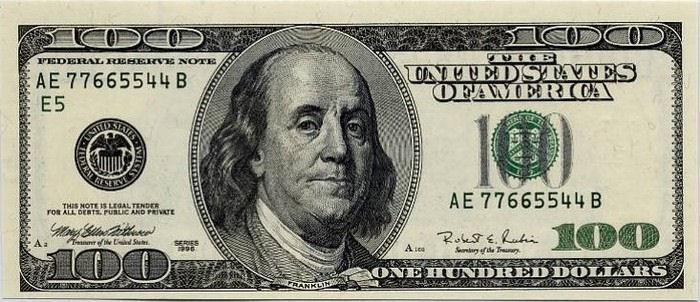
Money is holographic - it reflects everything within you and all around, including the whole world. That dollar in the your pocket or bank is influenced by collective confidence in its value, the banking system, world events, political elections, and maybe even sunspots! This is especially true of global currencies such as the dollars, euro, yen, and the British pound. Given the problems happening around global currencies, it is wise to think in terms of an "ecology of money". There are alternate local currencies circulating in places such as Ithaca, New York that exhibit success in terms of use and staying power; in Ithaca the local currency unit is called HOURS, based on units of labor time. Because HOURS are local compared to dollars, HOURS reflect more the value that people have for each other (as community) in Ithaca. The existence of HOURS (and other such currencies) may help counter the uncertainty of global money such as euros and dollars. HOURS may actually help save the dollar. HOURS are holographic to a local community; while Dollars are holographic to the whole system of national-international-corporate finance.
Story HOURS currency by its founder, Paul Glover in Winter 2012 issue of Positive News.


Story HOURS currency by its founder, Paul Glover in Winter 2012 issue of Positive News.

It's not either/or, we can have both.
Subscribe to:
Posts (Atom)
